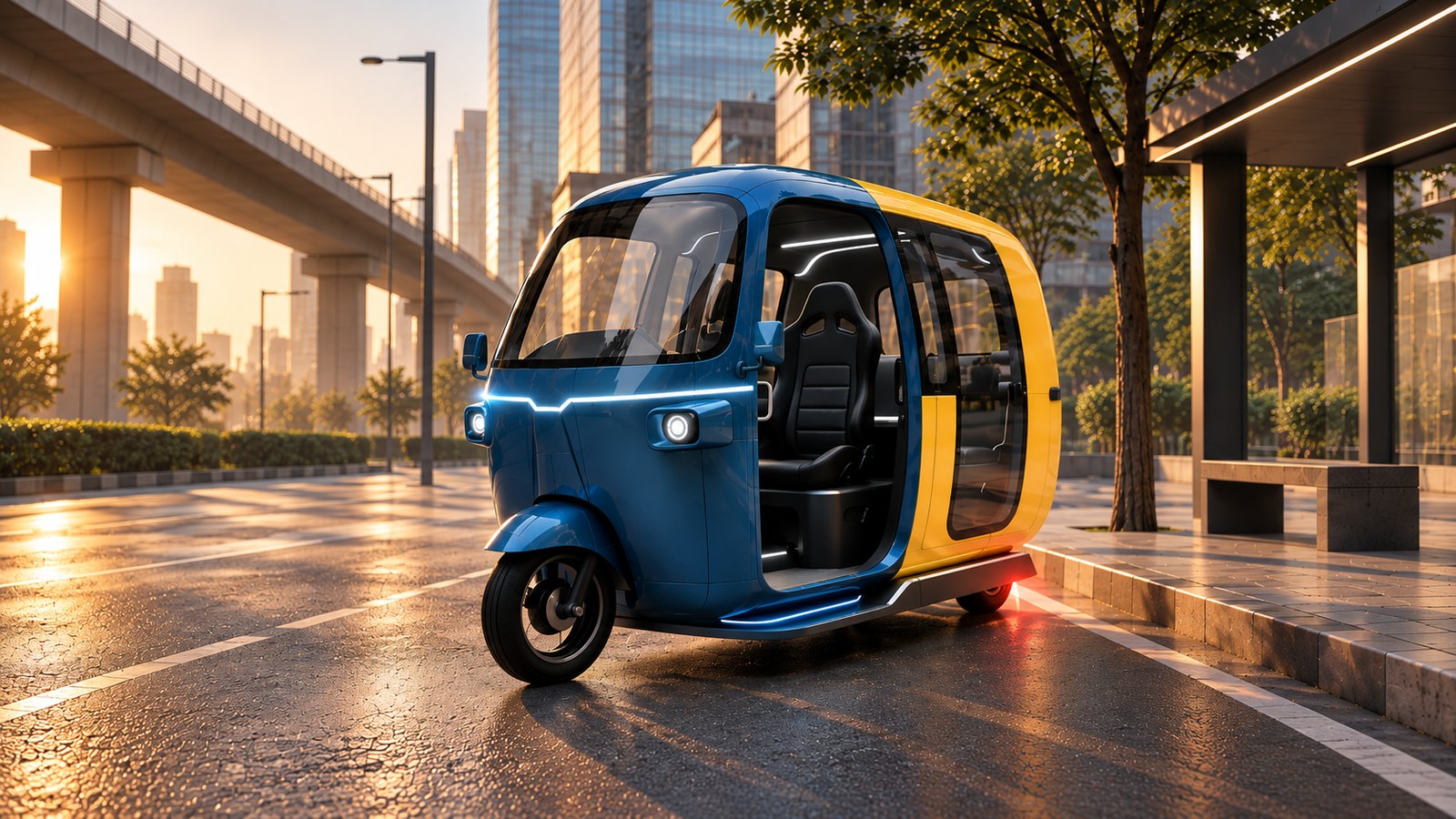
Case Study 02 · Inclusive Design · Winner, Hyundai Design for Dignity
Orthos-Adapt
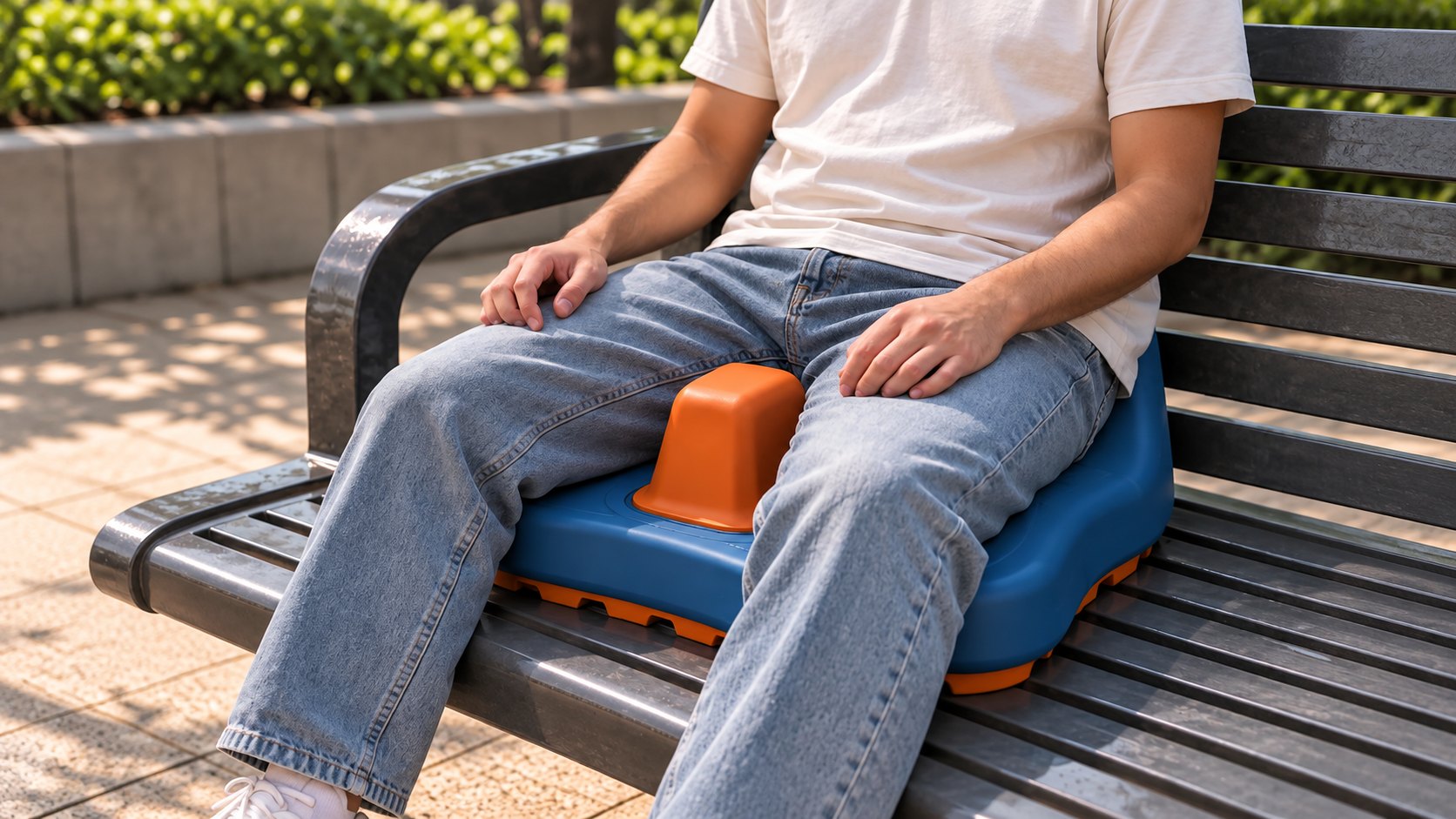
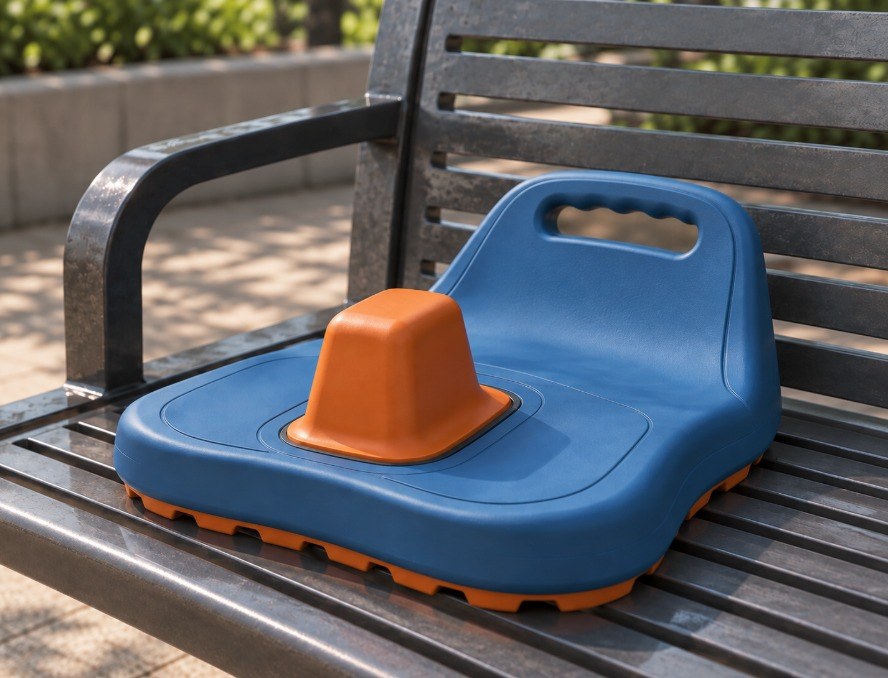
Any public bench, turned into a seat that holds you. It locks in place the moment a child sits down, so children with cerebral palsy can sit upright and steady wherever the city takes them.
- Team
- Vedant Kabra & Jay Parmar
- Award
- 1st Place, Hyundai Design for Dignity
- Users
- Children with CP, amputees
- Size
- 420 × 400 × 255 mm
1st
Award · 2026
Winner, Hyundai Design for Dignity Challenge
Chosen by the jury from entries across design and architecture schools for redefining public seating through active posture.
The Problem
Every bench assumes a strong core
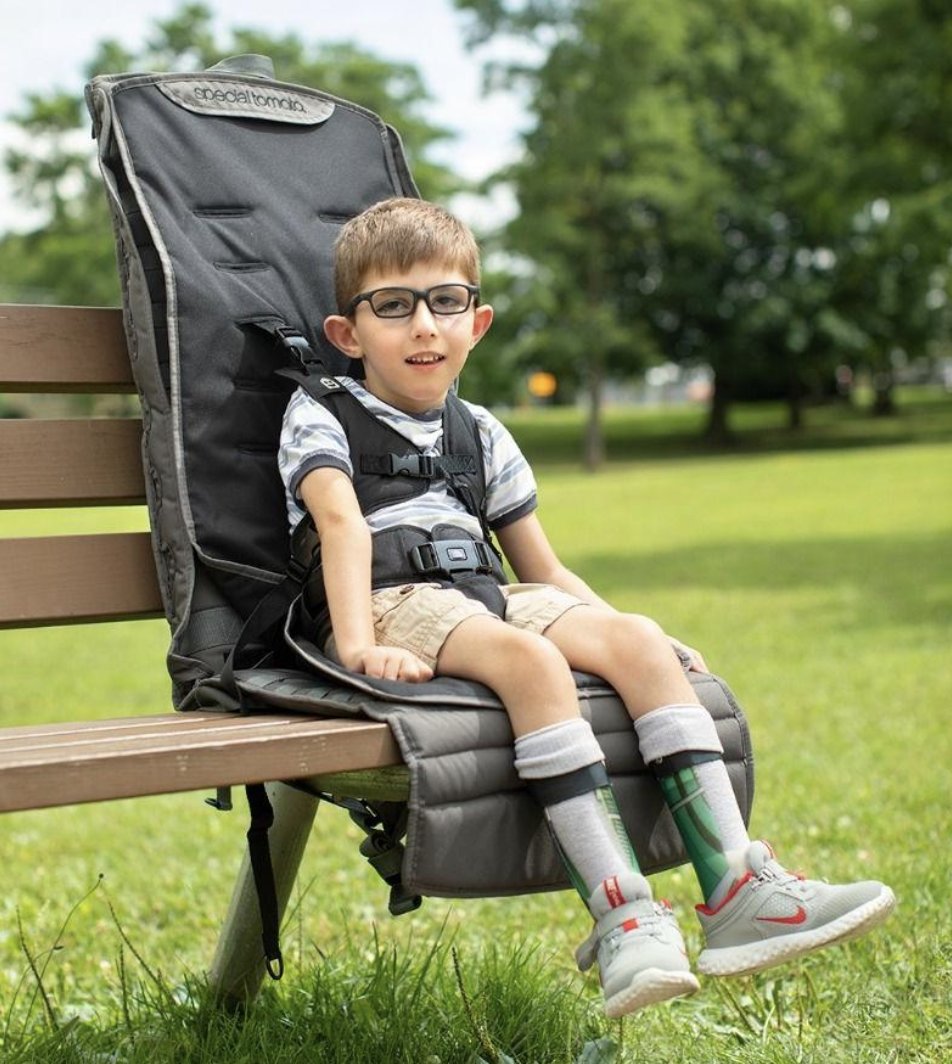
For a child with cerebral palsy, a flat bench is hard work. Without lateral support they lean and slide, and holding themselves up takes constant muscle effort. A sudden jerk in a moving vehicle can set off spasms.
Today's adaptive seats solve this at home, but they're bulky, rely on straps and buckles that need fine hand control, and look like medical equipment in a park or a classroom.
The gap
Support that's light enough to carry every day, fits any public seat, and works without anyone's help.
Active Posture
Holding the body, so the child doesn’t have to
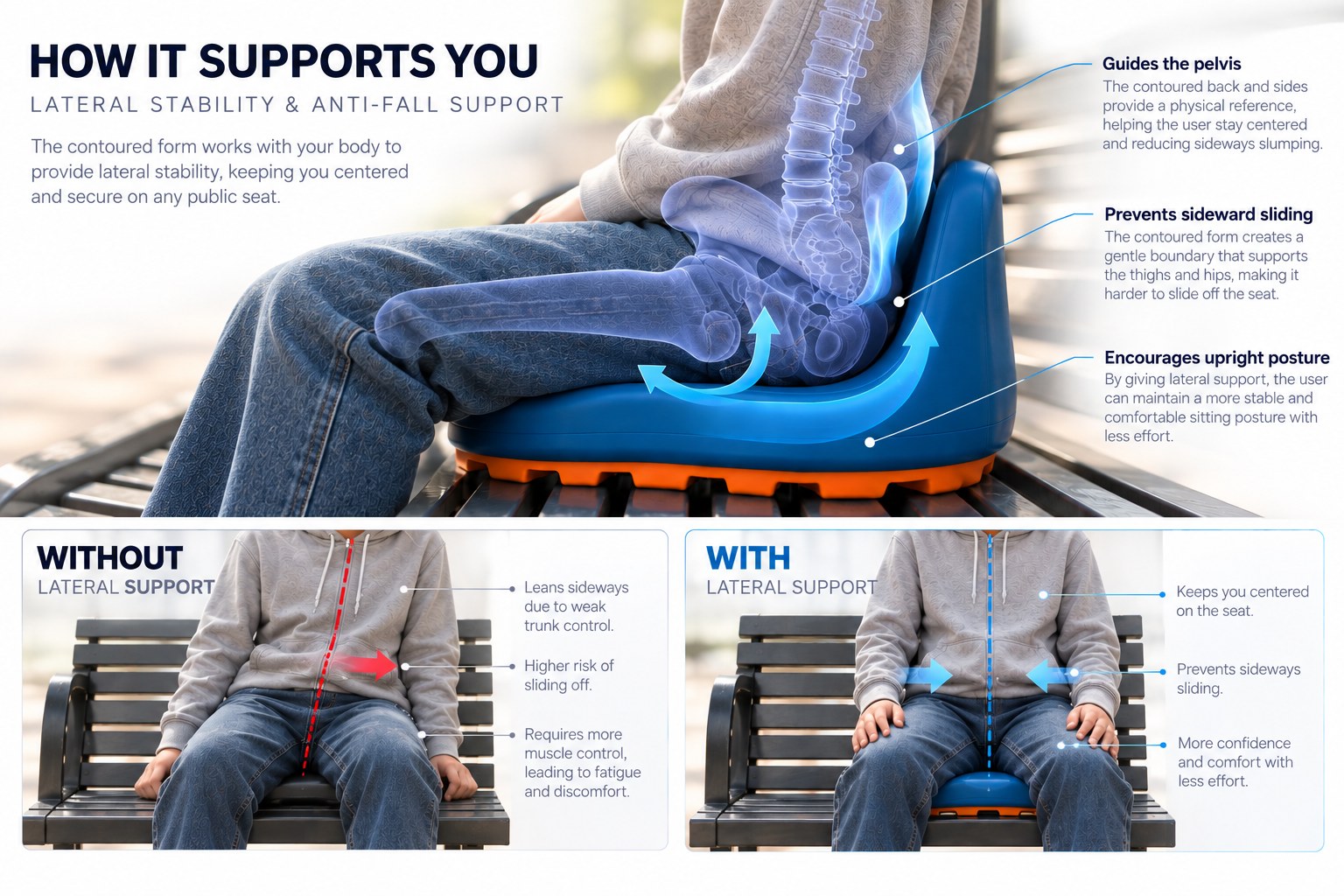
The contoured back and sides give the body a physical reference. They guide the pelvis, stop sideways sliding, and let the child keep an upright posture with less effort.
Form Exploration
Gear, not equipment
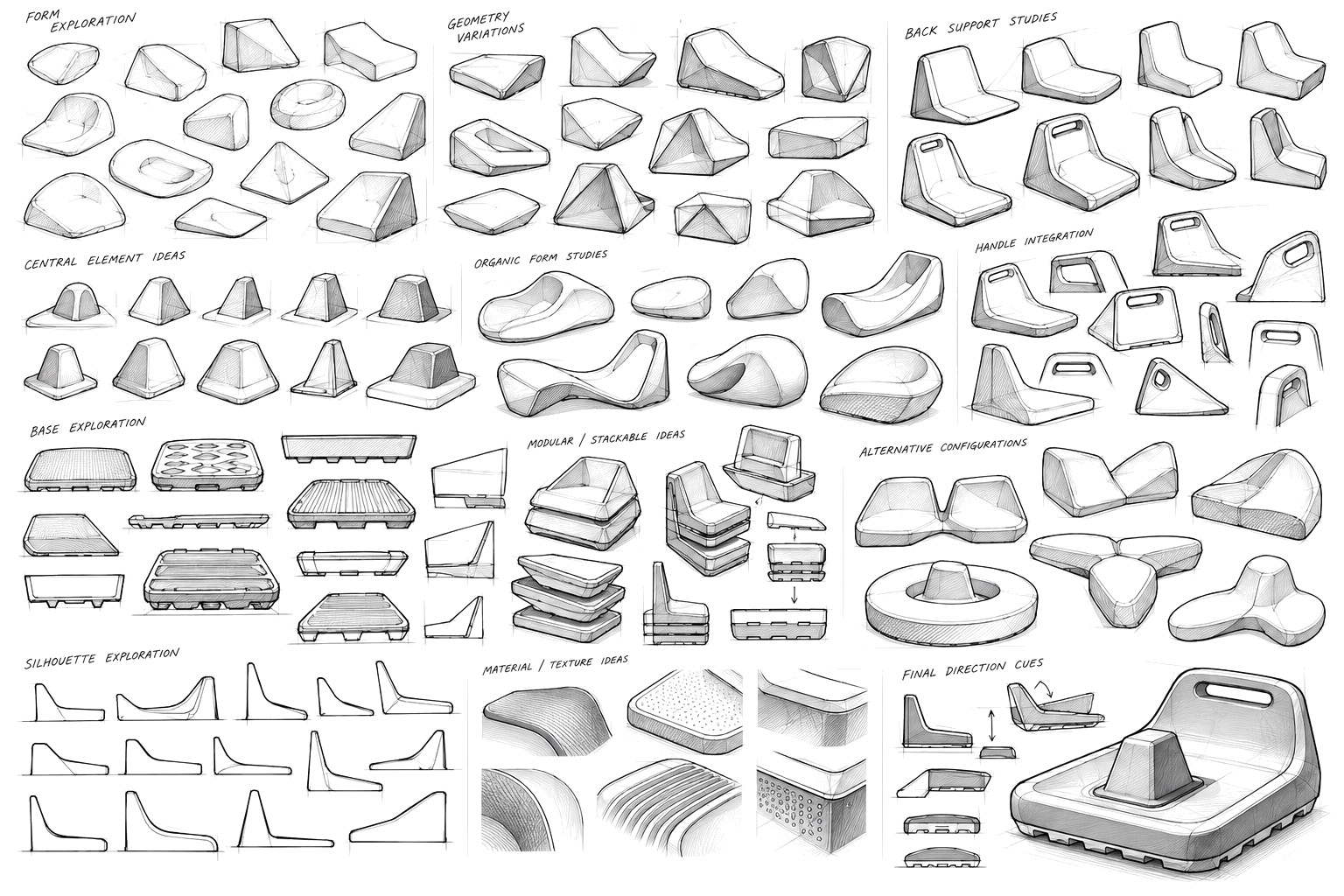
We explored geometry, back support, seating blocks, handles, bases and textures, searching for a form a child would be proud to carry: everyday gear, not a medical aid.
Identity
The logo is the seat seen from above: a blue shell wrapped around a bright orange core, like open arms around a child. It is support that holds without restraining. The open top matters just as much. There is always a way out, because dignity means being supported, never trapped.
Construction
Locks the moment you sit
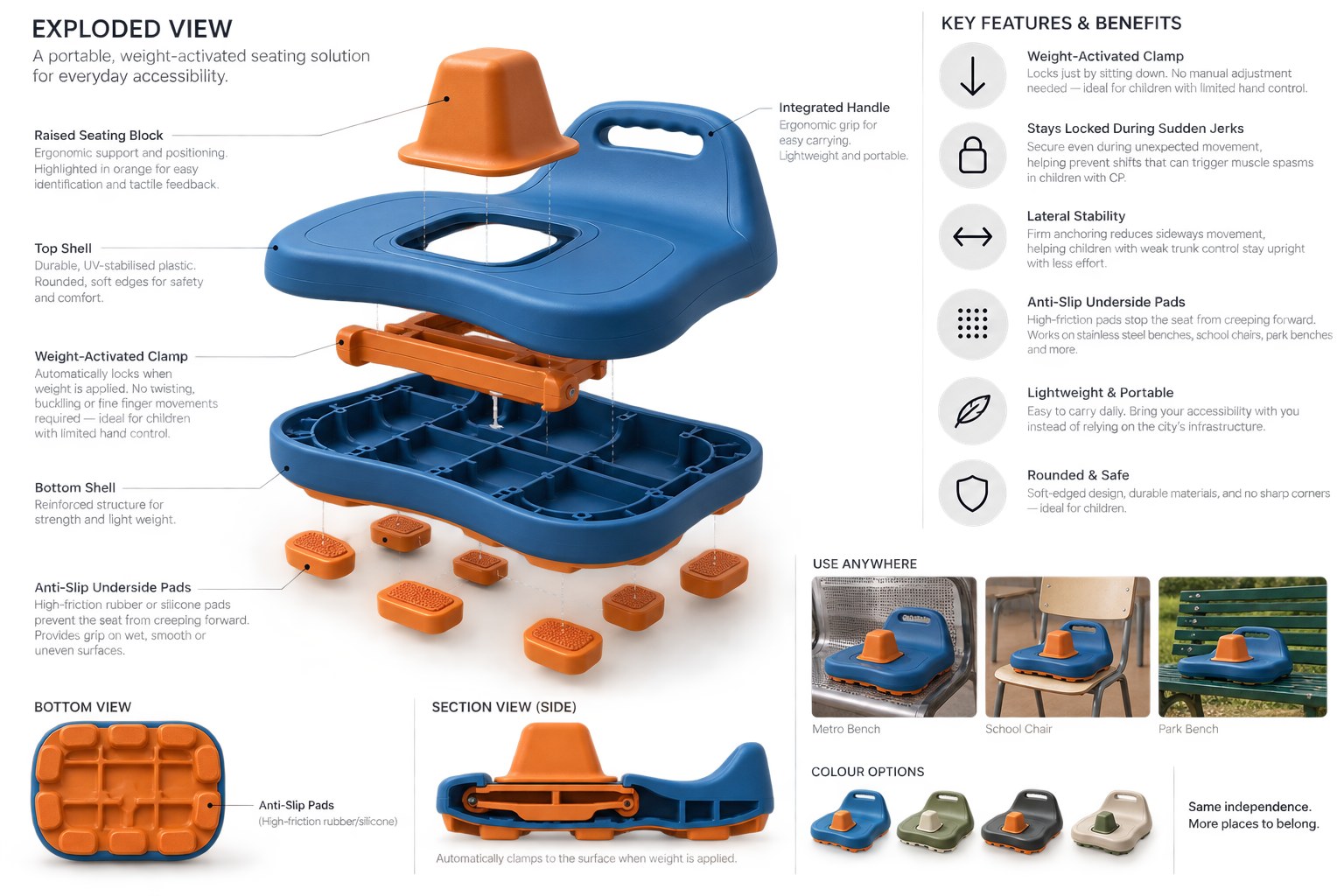
Five parts, no electronics. The key is the clamp between the shells: sitting down is the only action needed to lock it.
- 01Raised seating blockPositions the child and gives tactile feedback. Orange, so it's easy to find.
- 02Top shellDurable UV-stabilised plastic with rounded, soft edges.
- 03Weight-activated clampLocks under body weight. No twisting, buckling or fine finger movements, and it stays locked through sudden jerks.
- 04Bottom shellReinforced for strength while staying light.
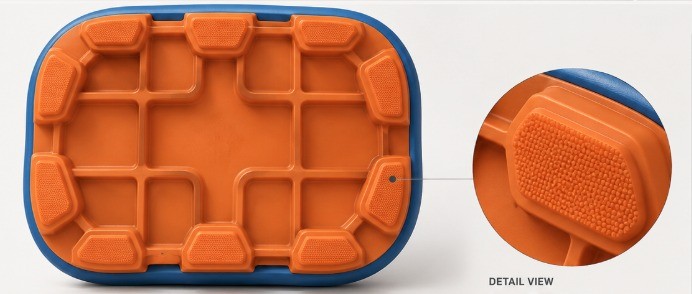
- 05Anti-slip padsHigh-friction pads that stop the seat creeping forward on steel, wood or wet surfaces.
CAD
Engineered to the millimetre
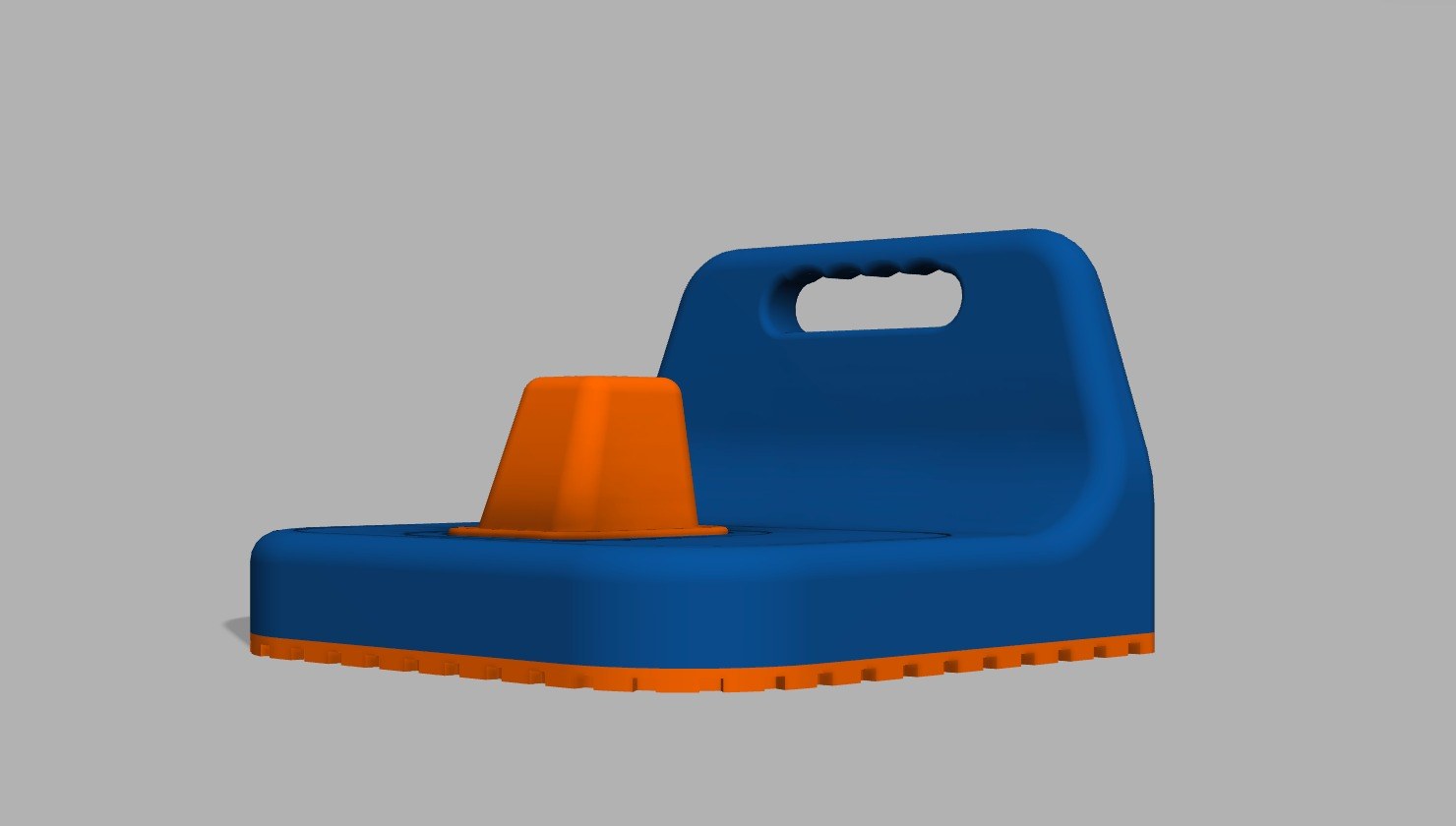
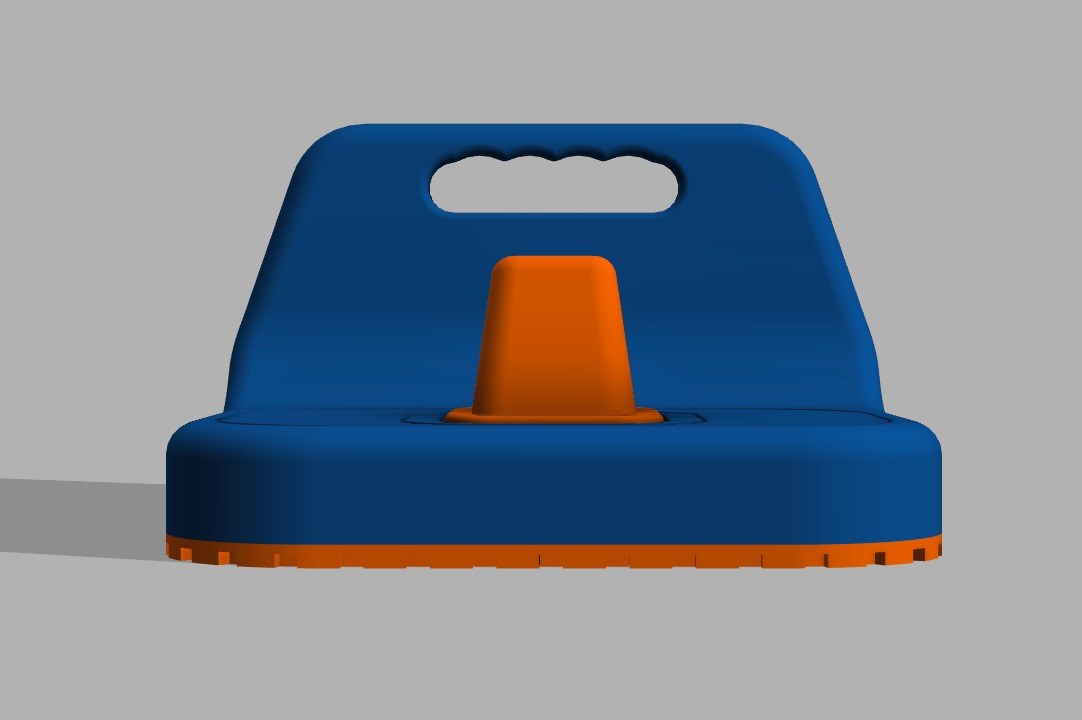
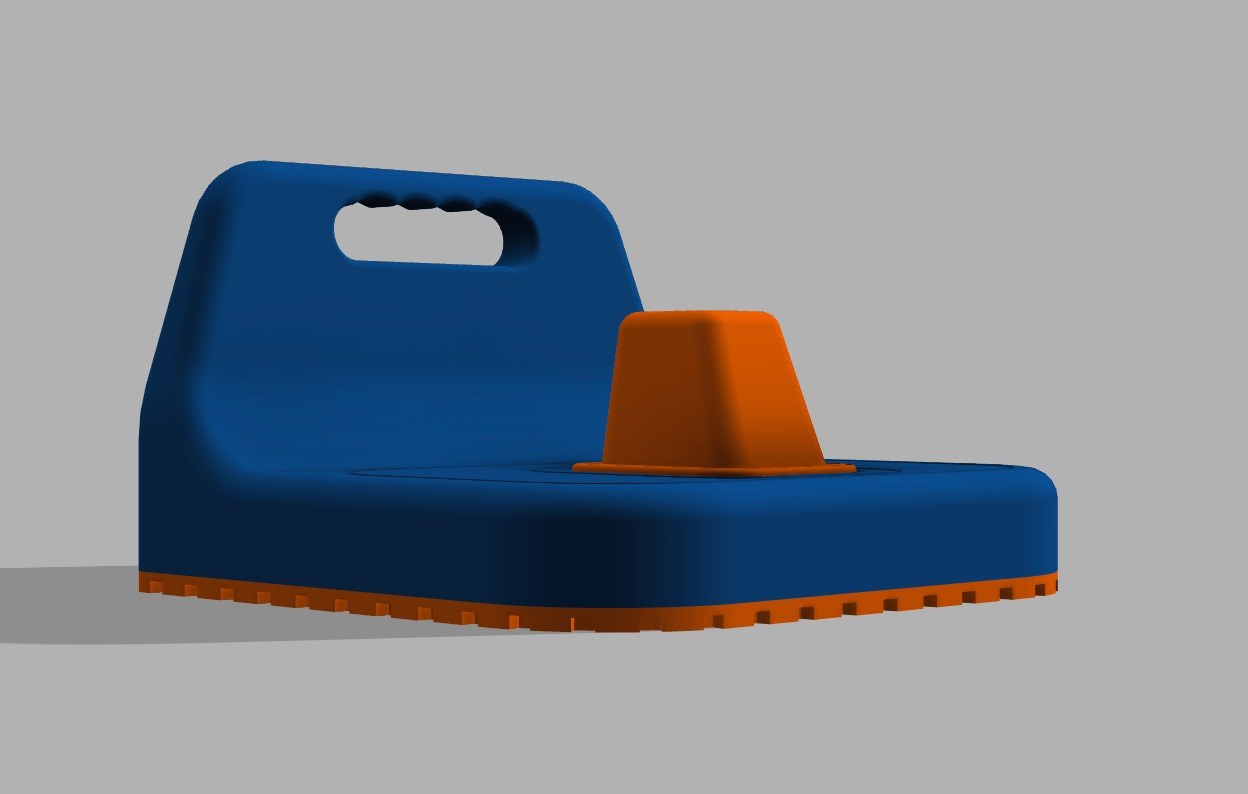
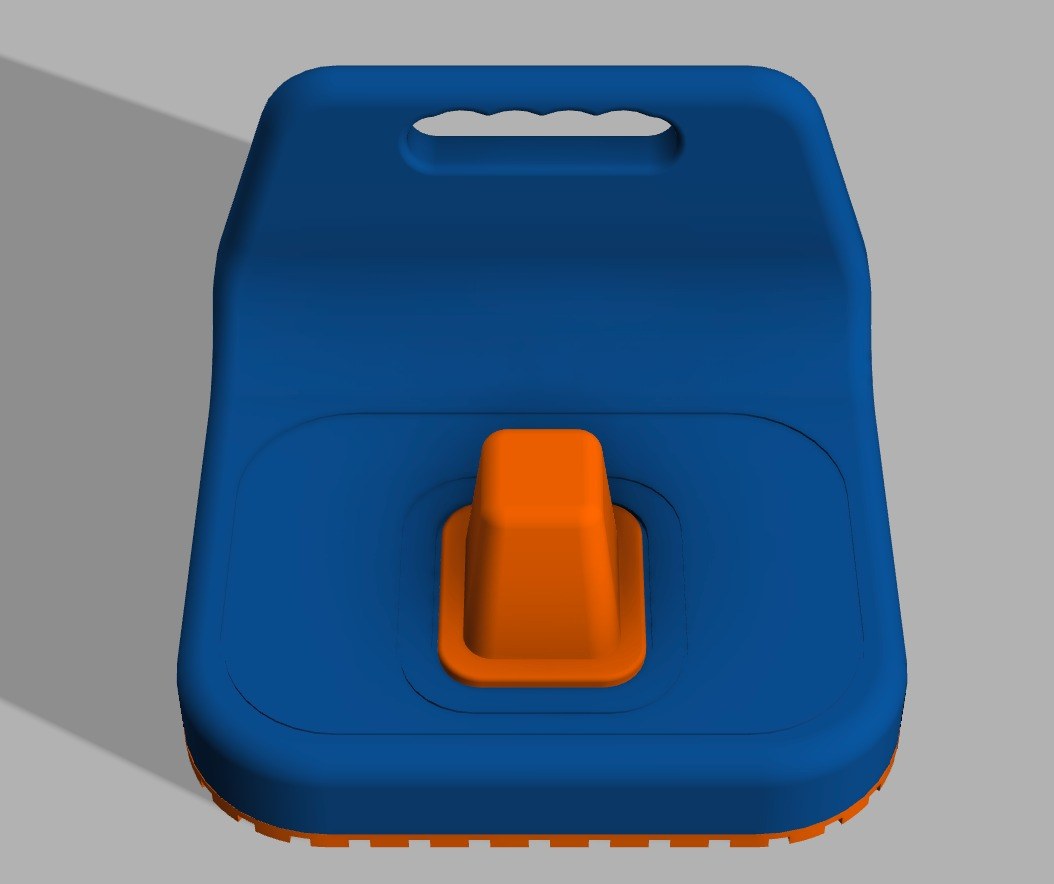
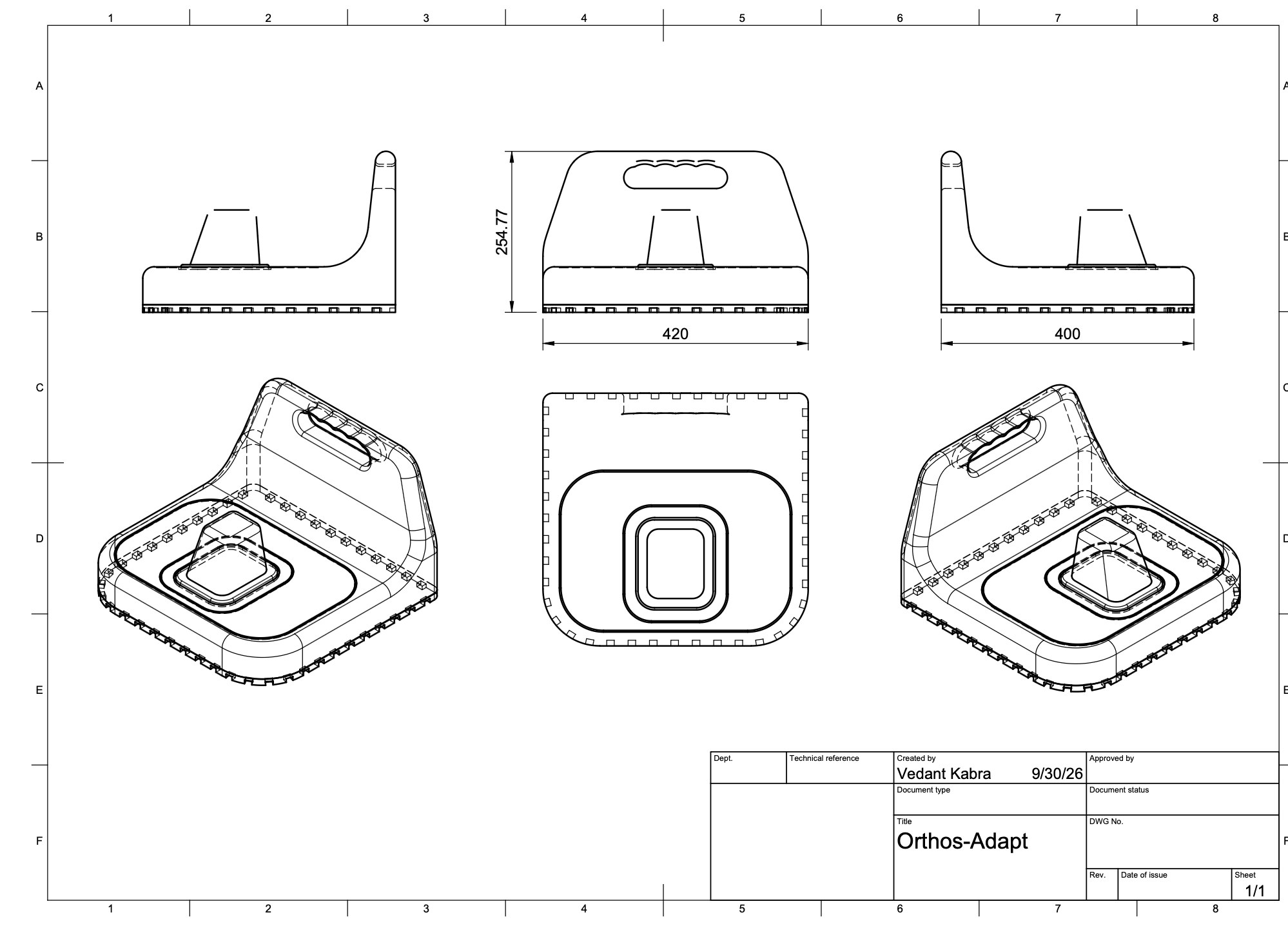
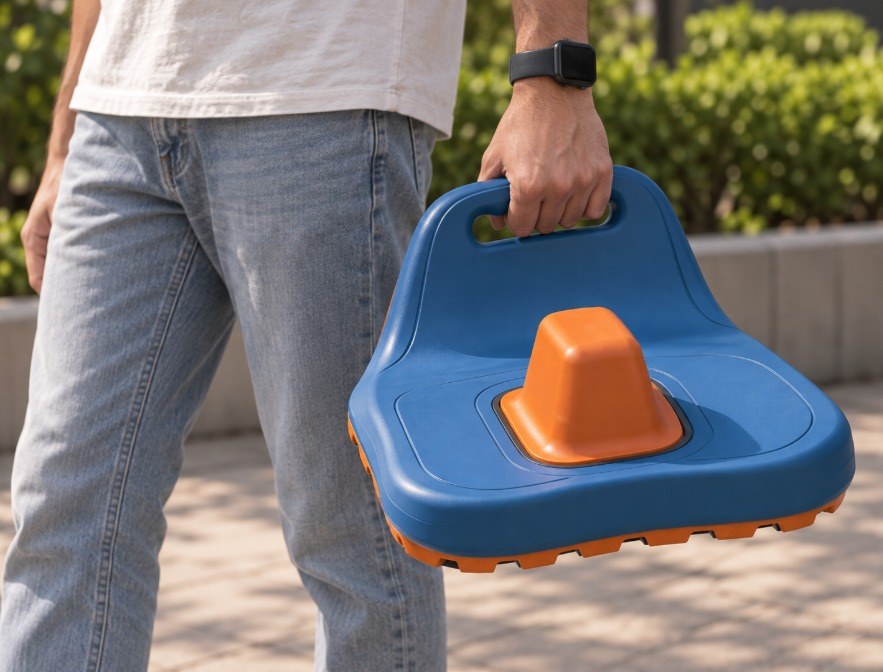
The final seat measures 420 × 400 × 255 mm: wide enough to support the hips, small enough for a child to carry by its integrated handle.
Final Design
Same independence, more places to belong
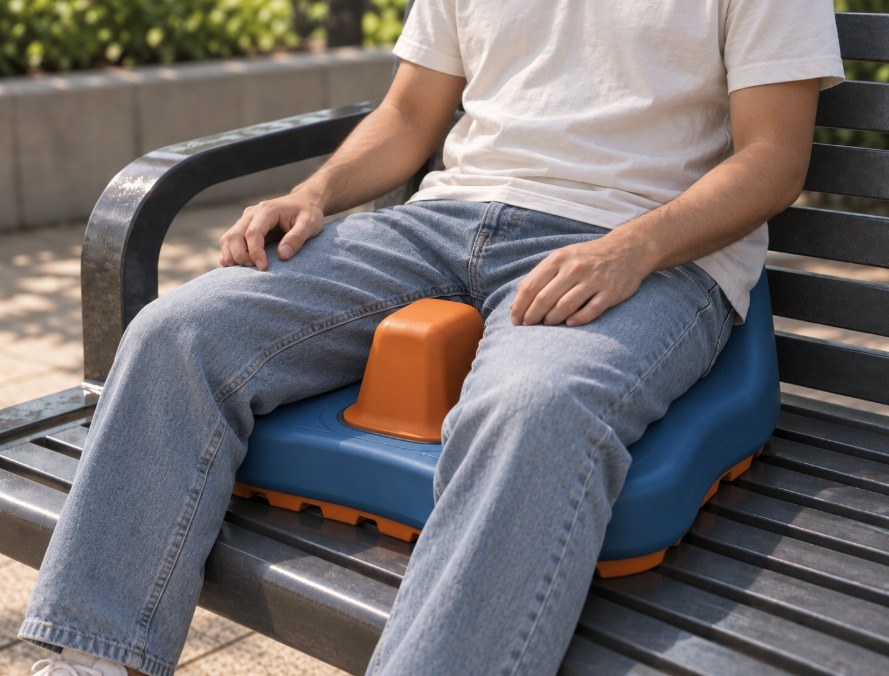
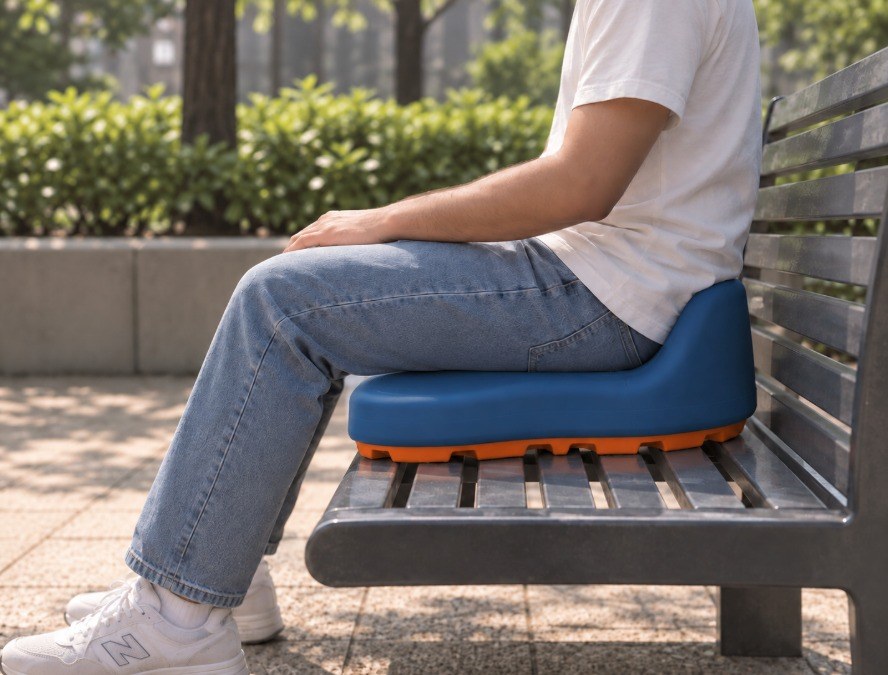
In the film, a child carries the seat across a busy public space, drops it onto a steel bench and sits down. The same clamp works on a bus, a car or any vehicle seat with an edge to grip. Nobody helps set it up, and nothing needs adjusting.
It is designed for the three places children spend their days outside home: schools, parks and public transport.
What's Next
Testing with the people it's for
The next step is testing with children with cerebral palsy, their families and physiotherapists, and checking the clamp across the real range of seat edges: bus and vehicle seats, school chairs and slatted park benches.
The biggest lesson was about dignity. Accessibility is usually built into places, and places are slow to change. Designing something a child carries with them puts that independence in their hands.